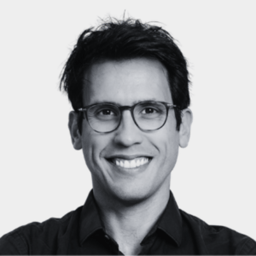
In a time when uncertainty has become a structural feature of the global order, economist and diplomat Marcos Troyjo offered a sharp diagnosis of Brazil's place in the world. In an in-depth interview with Canal UM BRASIL — an initiative of the São Paulo State Federation of Trade in Goods, Services and Tourism (FecomercioSP) — Troyjo, a former president of the New Development Bank and current global consultant to the European Investment Bank, argued that the country must stop choosing sides and start building bridges.
Troyjo warned that the world is undergoing a profound process of reorganization, in which trade, technology and geopolitics have become instruments of power. For Brazil, he believes this presents more opportunities than threats. But seizing them requires introspection: "The next big agreement Brazil must pursue is with itself."
Internally, Troyjo highlighted the country’s high public spending, burdensome tax structure and excessive government intervention as barriers to international competitiveness. "Without doing our homework," he said, "even the most favorable external scenarios won't help."
Yet Brazil is well positioned in the new global economy. In a world plagued by food insecurity, energy transition needs and demands for sustainable solutions, Brazil says "yes" to all these agendas. The country also boasts the second-largest reserves of critical minerals, making it a central player in the 21st-century resource economy.
One concept Troyjo coined is "trumpulence" — combining turbulence, Trump and opulence — to describe the erratic yet powerful influence of a US that is increasingly driven by media cycles and political theatrics. Despite some perceptions, Troyjo does not subscribe to the idea of an American decline. On the contrary, he underscored the country's enduring economic strength and dominance in innovation and capital markets. For Brazil, the challenge is not to resent American strength but to insert itself strategically within it.
However, in Troyjo’s view, US protectionist policies may ultimately hurt America by undermining the very global supply chains that fuel its transnational companies. He pointed to the incoherence between internal business-friendly reforms in the US and external trade restrictions. For Brazil, the risk is that capital fleeing China might bypass the country in favor of a deregulated, low-tax US economy.
Troyjo emphasized that Brazil must act pragmatically in its foreign policy, resisting ideological alignments in favor of pursuing national interest. Between the US and China, he said "Brazil must not choose sides, we must build bridges."
Troyjo envisions a new global ESG framework: no longer Environment, Social and Governance, but Economy, Security and Geopolitics, a situation to which Brazil must adapt or risk falling into irrelevance. In this landscape, national security includes both internal safety and predictable supply chains, and geopolitics outweighs other priorities.
Looking ahead, Troyjo urged a domestic roadmap grounded in reducing state intervention, improving fiscal health, boosting innovation and enhancing Brazil’s credibility. These, he argued, are prerequisites to harnessing global opportunities.
Touching on the protracted discussions around the EU-Mercosur free trade agreement, Troyjo said the deal could be transformative — not just for trade flows, but for attracting long-term investment and encouraging structural adaptation within Brazil's economy.
Finally, he pointed to a group of emerging "geopolitically pendular" nations —including Saudi Arabia, Turkey, Morocco and Singapore — that are gaining global relevance precisely because they remain flexible and non-aligned. Brazil, Troyjo said, should embrace that model: not as a passive actor, but as an assertive, bridge-building power in a fragmented world.