EDITORIAL
The national race runs through São Paulo
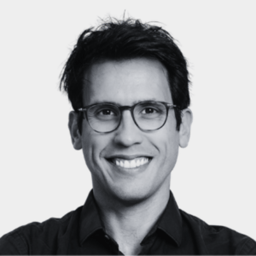
— by Paulo Abrão, executive director of the Washington Brazil Office
Senator Flávio Bolsonaro's appearance at hearings in the United States' Section 301 trade investigation is without precedent in recent Brazilian politics. In pressing for changes to trade policy, payment systems and bilateral economic relations, the opposition candidate is positioning himself as Washington's preferred interlocutor.
President Lula is moving the other way, working to diversify Brazil's international partnerships.
The latest presidential polls show Lula holding his lead, though by a margin narrow enough to keep the race highly competitive. The campaign is entering a phase in which the consolidation of regional alliances is likely to weigh more heavily on the outcome than the immediate fallout from recent political scandals.
At the state level, the clearest test is São Paulo. The latest Datafolha poll shows Governor Tarcísio de Freitas, backed by Jair Bolsonaro, widening his lead over Fernando Haddad, an ally of Lula, with 46% to 30% — the equivalent of 52% of valid votes, and enough to put a first-round win within reach.
In a hypothetical runoff, Tarcísio leads 53% to 37%. The figures have unsettled Lula's camp and are likely to shape both sides' national strategies, given the state's economic and electoral weight. Once again, São Paulo is not merely Brazil's largest electorate; it is the ground on which the contest for national power will be decided.
Be a part of this initiative!
Journalism and democracy are inseparable — and right now, both are under threat. A free press is not a luxury; it is the infrastructure of accountable governance, and when it weakens, so does everything else. That is why your support matters.
By donating to the International Observatory on Brazil's 2026 Elections, you are directly funding the journalists and editors who make this work possible. Every contribution goes toward staffing, deeper coverage and the tools we need to do this job the right way — on behalf of readers like you.
QUICK CATCH-UP
US sanctions Brazilian nationals linked to the PCC

US Treasury Department. Photo: Framalicious/Shutterstock
Last week, the US Treasury froze the assets of two Brazilian nationals and three Brazilian companies it accuses of laundering drug money for the First Command of the Capital, or PCC, Latin America's largest criminal syndicate. The sums are trivial. The message is not.
The Office of Foreign Assets Control named Victor Henrique de Oliveira Shimada, his relative and secretary Stella Stefanie de Oliveira, three São Paulo firms and a transport company Shimada controls near Lisbon. Treasury says he funneled more than USD 30 million in US drug proceeds back to Brazil in cryptocurrency, feeding a Florida cell indicted in January.
It is the first such designation since Washington branded the PCC and Rio's Red Command terrorist organizations, and Brasília is not treating it as a one-off. Tellingly, the alarm is loudest along Avenida Faria Lima, São Paulo's financial district.
The two groups now reach deep into the legal economy — fuel, construction, payments, real estate, even dental clinics — so a widening dragnet could snag ordinary companies and strain the banking system. Spooked lenders are already tightening their compliance rules.
Unlike a 2024 case, Treasury cited no Brazilian cooperation this time. São Paulo prosecutor Lincoln Gakiya, a leading PCC investigator, said his office has nothing tying Shimada to the syndicate. "This classification is unilateral; we were not consulted," he said.

USTR holds hearings on Brazil trade policies
The Office of the US Trade Representative held two days of hearings on Monday and Tuesday on whether to impose a 25% tariff on Brazilian goods, the culmination of a Section 301 investigation spanning digital trade, electronic payments — Pix, Brazil's instant-payment system, foremost among them — anti-corruption enforcement, ethanol and deforestation.
On paper a commercial dispute, it has become a Brazilian electoral matter, an audition over which Brazil Washington would rather deal with. Senator Flávio Bolsonaro, the far-right's standard-bearer, filed a submission that reads like a courtship letter: a zero-for-zero deal on ethanol and sugar, lighter rules for Visa and Mastercard, and a pledge that Pix will not be wired to "non-Western" settlement systems — a barely coded nod to China. He is scheduled to testify.
Lula, meanwhile, is building furniture in the other camp, opening a customs office in Brazil's Beijing embassy and pressing for a Mercosur-China deal. One candidate auditions for the West, the incumbent courts its chief rival.
Still, both candidates would rather conduct pragmatic trade policies if they win. But insulating how trade policy is made does not insulate its results. An ideological posture toward the world can strain Brazil's ties with its largest trading partner, China, or with its main destination of industrial goods, the US.
Caiado picks his running mate
Gilberto Kassab, the chairman of the Social Democratic Party (PSD), does not usually attach himself to losing causes, which is why his decision to join Ronaldo Caiado's presidential ticket landed in Brasília as a puzzle. Caiado had wanted a woman from finance who could reach young voters. Instead, he got the PSD's de facto owner — formidable but charmless. A single-party ticket signals either strength or a shortage of suitors. With Caiado stuck near 3%, you can guess which.
OTHER STORIES WE’RE FOLLOWING
Gag order on public officials kick in
The "defeso eleitoral" began on Saturday. The term is borrowed from environmental law, where the defeso is the seasonal fishing ban that lets fish spawn undisturbed. In politics, it marks the blackout window — opening three months before the vote — when restrictions on government advertising kick in, meant to stop officials using the machinery of the State to boost a candidate.
President Luiz Inácio Lula da Silva spent June sprinting against that calendar, visiting roughly one state every four days and packing 27 deliveries into a month. He concentrated on the Northeast, his heartland, where disapproval has crept up. The finale, on July 3, was wired live to a dozen cities.
Radical political influencers lead crowdfunding
Crowdfunded campaign cash is flowing to candidates with outsized social-media footprints and, often, radical convictions. Renan Santos, who leads the Free Brazil Movement (MBL) and preaches an anti-establishment, tear-it-all-down brand of far-right politics, has raised more than any other — BRL 1.1 million. Second is Jones Manoel, a militant of the left-wing Socialism and Freedom Party (Psol) who works to rehabilitate Josef Stalin. Third is Marcel Van Hattem of the Novo party, one of the far-right lawmakers who, after Jair Bolsonaro lost the 2022 election, championed a January 6-style revolt against Lula's inauguration.