EDITORIAL
The opposition in search of a new equilibrium
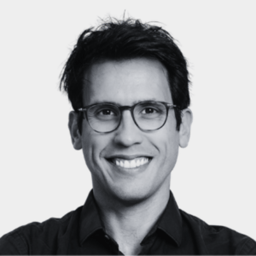
— by Paulo Abrão, executive director of the Washington Brazil Office
The polls released following the revelations involving Flávio Bolsonaro and the Banco Master scandal are beginning to produce their first tangible political effects on Brazil’s 2026 presidential race. What had appeared to be a relatively stable contest between Luiz Inácio Lula da Silva and the leading heir to Bolsonaro’s political movement has once again become a scenario marked by greater uncertainty.
For the first time in many months, Lula is opening a consistent lead over Flávio Bolsonaro in runoff simulations, while other opposition figures (such as Romeu Zema and Ronaldo Caiado) continue to post competitive numbers and remain viable contenders.
More important than the polling shifts themselves is their impact on the behavior of political parties and key leaders. Flávio Bolsonaro’s weakening has reopened a debate that until recently seemed settled: who will ultimately represent Lula’s opposition in the presidential election.
Strategic parties essential to building a competitive national coalition, such as Progressives (PP) and Republicans, have begun signaling doubts about automatically aligning with the Bolsonaro heir, while sectors of the right and center-right are once again considering alternative candidates.
This realignment is also affecting state-level races. Governors, mayors and regional leaders tend to avoid early commitments when the national leadership of their political camp appears unstable. In several states, negotiations over electoral alliances and tickets increasingly reflect not only local dynamics, but also uncertainty over who will emerge as the opposition’s national standard-bearer.
The result is greater political fragmentation and a stronger role for state-level calculations.
At the same time, Lula is seeking to consolidate his position by shifting the political debate toward issues with broad social and economic appeal. The approval in the lower house of a proposal to gradually reduce the workweek without reducing wages represents an important political victory for the government and reinforces its effort to associate the campaign with themes such as income, employment and quality of life.
The issue has significant electoral appeal and is likely to occupy a central place in the political debate in the months ahead.
Brazil’s 2026 election is therefore entering a new phase. The opposition’s main challenge is no longer simply defeating Lula, but determining who has the legitimacy to lead the opposition itself. While Lula remains the virtually uncontested candidate of the center-left, the right and center-right are entering a period of reorganization and internal competition.
The coming weeks will reveal whether Flávio Bolsonaro’s decline was merely a temporary setback or the beginning of a deeper reshaping of Brazil’s electoral landscape.
QUICK CATCH-UP
US labels Brazil's main crime syndicates as terrorist organizations

US Secretary of State Marco Rubio. Photo: Freddie Everett/State Department
US Secretary of State Marco Rubio designated the Comando Vermelho (Red Command, or CV) and the Primeiro Comando da Capital (First Command of the Capital, or PCC) as foreign terrorist organizations.
The decision blindsided Brasília, which says it learned of the move on social media (without a bilateral heads-up) three weeks after a meeting between Presidents Donald Trump and Luiz Inácio Lula da Silva that both sides had called productive. "We do not accept being treated like a banana republic," Lula reacted on Friday.
The announcement followed a Washington visit by Senator Flávio Bolsonaro, Lula's most competitive challenger, who met with Trump and Rubio and quickly claimed credit.
In a country where 94% of residents call their cities violent, public security is fertile electoral terrain — and an area in which the left has long lagged behind the right.
The deeper threat, however, is economic. Under US material-support statutes (which reach beyond American borders), banks, insurers and multinationals must now treat any operation that might touch the gangs as toxic. Officials fear that contagion could affect Pix, Brazil’s instant-payment system, which processes more than 7 billion transactions a month. Mexico offers a warning: after Washington designated its cartels last year, compliance and logistics costs shot up.
Some who fight the gangs see the terrorist designation as a setback, not a victory. Lincoln Gakiya, a São Paulo prosecutor who often has threats made against his life, warned that recasting organized crime as a national security concern would close the bilateral cooperation channels that he and his colleagues rely on.


USTR recommends 25% tariffs on Brazil
Four days after the US designated Brazil’s largest crime syndicates as terrorist organizations, the US Trade Representative proposed a 25% tariff on most Brazilian exports, calling several Brazilian practices “unreasonable.”
The proposal is not yet in force, opening a public consultation period that calls for submissions until July 1 and a hearing scheduled for July 6. Still, the USTR’s direction is clear.
Washington’s main complaints involve content moderation, Pix, corruption, preferential trade agreements and intellectual property enforcement. The USTR accuses Brazilian courts of censoring US platforms, criticizes Pix for disadvantaging American payment firms, and cites the dismantling of Operation Car Wash as evidence of weakened anti-corruption standards. It also objects to preferential tariffs granted to Mexico and India.
Notably, Embraer aircraft, rare earths, orange juice and tropical fruits would be exempt.
Police furthers fuel fraud probe
A police operation last week exposed deeper ties between Brazil’s financial sector, fuel traders and the criminal gangs recently designated as terrorist organizations. Investigators traced how several fintechs have laundered money for fraudsters and disguised its origins.
The firms relied on so-called contas-bolsão, which are umbrella accounts at regulated institutions that let a fintech manage multiple client sub-accounts. Designed to cut costs for foreign-trade operations, they were instead used to obscure who owned what: revenue from many account holders pooled into a single account under the fintech's tax ID, with the real owners identifiable only in the company's private ledger.
The case shows how the PCC and CV have burrowed into the legitimate economy — and why the US designation poses a threat to the financial system as a whole.
House passes bill for shorter workweek
A constitutional amendment to abolish Brazil's six-day workweek (common in sectors such as retail) cleared the House by a wide margin. Championed by the Lula administration, it drew support from nearly every party — owing largely to the looming elections.
The Senate will be tougher on the bill. On Thursday, Senate President Davi Alcolumbre referred a rival, opposition-backed proposal to the Constitution and Justice Committee. Rather than scrapping the six-day workweek outright, that text would create a more flexible system based on total hours worked.
In a recent poll, 22% of voters credited President Lula for the popular measure and 13% credited the House. Some 52% couldn't say who was responsible — leaving the government room to claim the win. Business leaders oppose the move, saying that reducing the workweek without wage cuts will lead to inflation and layoffs, given Brazil's lagging productivity.
OTHER STORIES WE’RE FOLLOWING
Police operation targets producer of Bolsonaro biopic
The São Paulo police carried out several raids on Monday morning as part of an investigation into suspected embezzlement tied to a contract between the city government and ICB, an organization owned by Karina Gama, who also runs Go UP Entertainment, the producer of "Dark Horse," the infamous not-yet-released biopic about former President Jair Bolsonaro. Investigators are examining whether ICB signed fraudulent contracts with São Paulo's municipal government and funneled the proceeds into the film.
Rio accounts court rejects Castro's books
Rio de Janeiro's State Accounts Court rejected the 2025 accounts of the former Cláudio Castro administration. The move is unusual for a body that rarely flexes its watchdog powers and is a sign of Castro's political collapse. The former governor, who left office in March and was later barred from running by the electoral courts, was hit by two Federal Police operations in 11 days, as investigators linked him to a series of scandals.
Despite his ineligibility, Castro planned to run for a Senate seat and fight his way to Brasília in court — but was forced to drop out entirely.
Be a part of this initiative!
Journalism and democracy are inseparable — and right now, both are under threat. A free press is not a luxury; it is the infrastructure of accountable governance, and when it weakens, so does everything else. That is why your support matters.
By donating to the International Observatory on Brazil's 2026 Elections, you are directly funding the journalists and editors who make this work possible. Every contribution goes toward staffing, deeper coverage and the tools we need to do this job the right way — on behalf of readers like you.